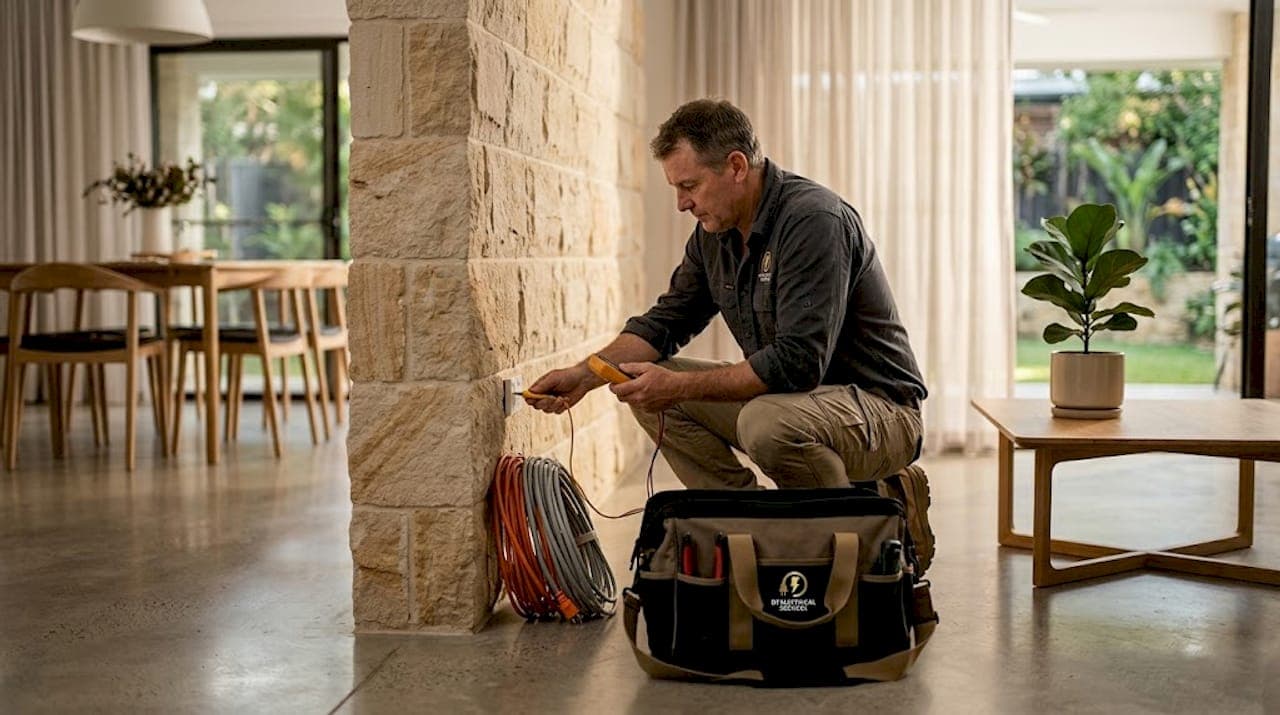
Electrical problems rarely announce themselves at a convenient time. A tripping circuit breaker on a Saturday night, a flickering light that gets worse every week, a power point that stopped working for no obvious reason. Understanding the types of home electrical repairs Brisbane and Gold Coast homeowners commonly face helps you act faster, spend smarter, and stay safer. Whether you rent or own, knowing what each repair involves, how urgent it is, and what a licensed electrician should be doing gives you real confidence when something goes wrong at home.
Table of Contents
- Key takeaways
- How to evaluate and prioritise home electrical repairs
- Common types of home electrical repairs in Brisbane and the Gold Coast
- 1. Switchboard and fuse box upgrades
- 2. Faulty power points and switches
- 3. Lighting repairs and replacements
- 4. Smoke alarm installation and compliance
- 5. Fault finding for power outages and tripping breakers
- 6. Safety switch and RCD repairs
- 7. Ceiling fan installation and repair
- 8. Home wiring repairs
- Comparison of repair types: urgency, cost, and safety impact
- How to engage electrical repair services in Brisbane and the Gold Coast
- My take on home electrical repairs in this region
- Trusted electrical repairs for Brisbane and Gold Coast homes
- FAQ
Key takeaways
| Point | Details |
|---|---|
| Safety comes first | Flickering lights, tripping breakers, and burning smells need professional attention without delay. |
| Licenced electricians only | All home electrical work in Queensland must be carried out by a licenced professional, not DIY. |
| Compliance standards matter | Australian wiring rules under AS/NZS 3000 govern every residential electrical installation and repair. |
| Prioritise by urgency | Some repairs can wait weeks; others, like faulty safety switches, need same-day attention. |
| Maintenance prevents emergencies | Routine checks and timely small repairs reduce the likelihood of costly emergency call-outs. |
How to evaluate and prioritise home electrical repairs
Before you pick up the phone to book a residential electrician in Brisbane or the Gold Coast, it pays to understand what you are dealing with. Not every electrical issue carries the same risk, and knowing how to read the signs helps you communicate clearly with your electrician and avoid being caught off guard by costs.
Safety hazards to watch for:
- Lights that flicker or dim without explanation
- Circuit breakers that trip repeatedly, especially on the same circuit
- Power points or switches that feel warm to the touch
- A burning or plastic smell near the switchboard or outlets
- Sparks when plugging in appliances
Common residential electrical issues like these require timely repair to protect both your home and your family. The Queensland climate adds its own complications. High humidity on the Gold Coast can accelerate moisture damage inside wall cavities, degrading cable insulation over time. In older Brisbane homes, aluminium wiring from the 1960s and 1970s presents a specific risk that newer homes simply do not have.
Cost versus long-term value is another consideration. A quick fix on a faulty socket might cost $150 today, but ignoring the underlying wiring fault could lead to a much larger repair bill, or worse, a house fire. Australian wiring rules under AS/NZS 3000 standards govern every installation and repair, so any licensed electrician you hire must work within these requirements.
Pro Tip: Always ask your electrician whether a repair addresses the symptom or the root cause. A good tradesperson will tell you if there is a deeper issue worth investigating while they are already on site.
Common types of home electrical repairs in Brisbane and the Gold Coast
This is the core of what most homeowners need to know. Licensed domestic electricians cover a broad range of household electrical services, and each repair type carries its own level of complexity and urgency.
1. Switchboard and fuse box upgrades
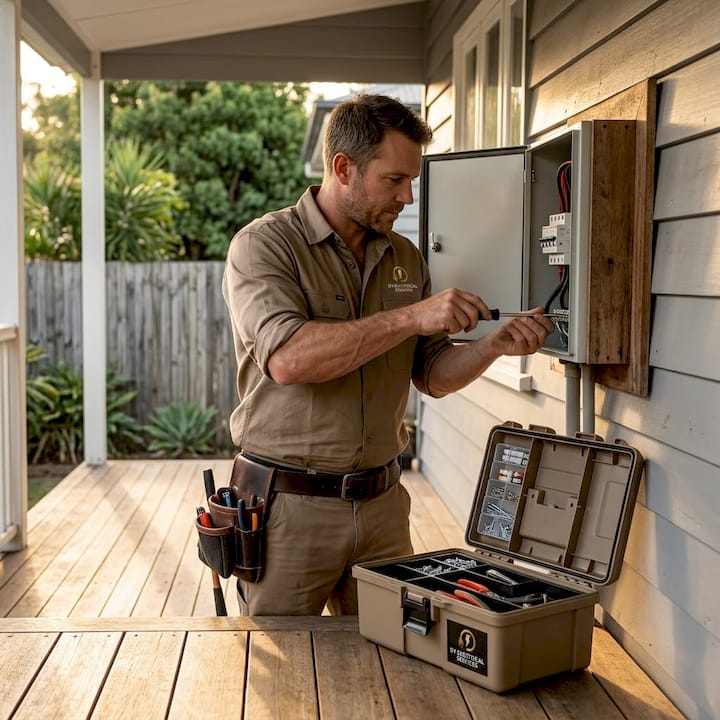
Older switchboards fitted with ceramic fuses are a genuine safety risk. They cannot handle the electrical load of modern homes, and they lack the safety switches that protect against electrocution. Upgrading to a modern switchboard with circuit breakers and residual current devices (RCDs) is one of the most impactful repairs a homeowner can make. If your switchboard still uses rewireable fuses, it is worth reading about when to upgrade your switchboard before waiting for a fault to force your hand.
2. Faulty power points and switches
A dead power point or a switch that no longer clicks properly might seem minor, but it often signals a loose connection or a wiring fault behind the wall. Left alone, loose connections generate heat and can cause arcing, which is a leading cause of house fires. Replacing a faulty socket or switch is a straightforward job for a licenced electrician and typically takes under an hour.
3. Lighting repairs and replacements
This covers everything from a single globe that will not stay on to outdoor security lights that have stopped responding. Lighting faults are sometimes as simple as a failed driver in an LED downlight, but they can also point to a wiring fault in the circuit. Outdoor lighting on the Gold Coast is particularly vulnerable to corrosion from salt air, so using fittings rated for coastal environments matters.
4. Smoke alarm installation and compliance
Queensland has some of the strictest smoke alarm laws in Australia. Since January 2022, all homes being sold or leased must have interconnected photoelectric smoke alarms installed in specific locations. For homeowners and landlords, non-compliance carries real financial and legal risk. Smoke alarm compliance is not optional, and a licenced electrician can assess your current setup and bring it up to standard efficiently.
5. Fault finding for power outages and tripping breakers
When a circuit keeps tripping or a section of your home loses power, the cause is not always obvious. Professional fault finding involves systematic testing to isolate whether the problem is a faulty appliance, a wiring fault, or an overloaded circuit. Emergency electrician services in Brisbane and the Gold Coast carry specialised testing instruments to diagnose faults quickly, which matters when you have no power to a kitchen or bathroom.
6. Safety switch and RCD repairs
Safety switches, also called RCDs, are the devices that cut power within milliseconds when they detect a current leakage. They are your primary protection against electrocution. RCD testing is legally mandated to verify that safety switches trip within 300 milliseconds, and a faulty RCD that fails to trip during a fault is far more dangerous than no RCD at all. If your safety switch trips constantly without a clear cause, or if it refuses to reset, call a licenced electrician the same day.
7. Ceiling fan installation and repair
Ceiling fans are a staple in Brisbane and Gold Coast homes given the climate. Installing a new fan requires correct wiring and secure mounting to a rated ceiling box. Repairs typically involve replacing a faulty capacitor, fixing a wiring connection, or replacing the motor. A fan that wobbles, hums loudly, or runs at the wrong speed on every setting usually has a fixable electrical fault rather than a mechanical one.
8. Home wiring repairs
Damaged or degraded wiring is the repair type that carries the highest risk if ignored. Insulation resistance tests using high DC voltage can identify cracks or moisture damage in cables before they cause a short circuit or fire. In older homes, wiring repairs might involve replacing sections of deteriorated cable or upgrading to modern wiring standards throughout the property. This is not a repair where cutting corners is ever worth it.
Pro Tip: If you are buying an older Brisbane or Gold Coast home, ask for an electrical inspection before settlement. A licenced electrician can identify hidden wiring faults that a standard building inspection will miss.
Comparison of repair types: urgency, cost, and safety impact
Understanding how different repairs stack up helps you decide what to book today versus what can wait until next month.
| Repair type | Urgency | Typical cost range | Safety impact |
|---|---|---|---|
| Switchboard upgrade | High | $800 to $2,500+ | Very high: prevents overloads and fires |
| Faulty power point or switch | Medium | $100 to $300 | Medium: risk of arcing if ignored |
| Lighting fault | Low to medium | $80 to $400 | Low to medium depending on cause |
| Smoke alarm compliance | High (legal requirement) | $200 to $600 | Very high: life safety device |
| Fault finding and circuit repair | High | $150 to $500+ | High: unknown faults carry serious risk |
| RCD and safety switch repair | Very high | $150 to $400 | Critical: direct electrocution risk |
| Ceiling fan installation or repair | Low | $100 to $350 | Low to medium |
| Home wiring repair | High | $300 to $2,000+ | Very high: fire and shock risk |
The repairs in the "very high" safety impact column should never be deferred. Fault loop impedance testing confirms that a circuit breaker will trip instantly during a short circuit, and this kind of professional verification is something no homeowner can replicate with a visual check alone.
How to engage electrical repair services in Brisbane and the Gold Coast
Choosing the right electrician is as important as identifying the right repair. Here is what to look for and what to do before the job starts.
- Verify their licence. In Queensland, all electrical work must be carried out by a licenced electrician. You can check a licence on the Queensland Building and Construction Commission (QBCC) website. Do not accept verbal assurances.
- Ask about compliance testing. A professional will carry out sequential safety testing after completing any installation or repair, as required under AS/NZS 3017. If an electrician does not mention testing, ask why.
- Get a written quote. Reputable local electrical repair services in Gold Coast and Brisbane will provide a clear quote before starting work. Avoid anyone who cannot give you a price estimate upfront.
- Clear access before they arrive. Move furniture away from power points, clear the area around your switchboard, and note which circuits are affected. This saves time and reduces your bill.
- Schedule regular maintenance. A periodic electrical inspection every three to five years catches deteriorating wiring, overloaded circuits, and compliance issues before they become urgent. Electrical maintenance guidance is especially relevant for landlords and property owners with older homes.
Earth continuity testing is one check that professional testing covers and that a simple visual inspection cannot replicate. Without it, you cannot know whether your earthing system will actually protect you during a fault.
My take on home electrical repairs in this region
I have seen a pattern repeat itself more times than I can count. A homeowner notices something odd, a flickering light or a breaker that trips once a month, and they put it on the back burner because it seems minor. Six months later, the same issue has become an urgent fault that costs three times as much to fix and caused real stress in the meantime.
The other thing I have learned is that professional testing is not optional. It is genuinely irreplaceable. You cannot look at a cable and know whether its insulation has degraded. You cannot feel whether an earth conductor is carrying fault current correctly. These things require instruments and training, and the homeowners who understand this tend to have far fewer electrical emergencies over time.
My honest advice: do not wait for something to fail completely before you act. If your switchboard still has ceramic fuses, book an upgrade this year. If your smoke alarms are not interconnected and photoelectric, sort that out before anything else. And if something feels wrong electrically in your home, trust that instinct and get a licenced electrician to look at it. The cost of a professional assessment is always less than the cost of what happens when you ignore a real problem.
— Dayne
Trusted electrical repairs for Brisbane and Gold Coast homes
DY Electrical Services works with homeowners and renters across Brisbane Southside, Logan, and the Northern Gold Coast to handle the full range of residential electrical repairs. From switchboard upgrades and smoke alarm compliance to fault finding and safety switch repairs, every job is completed to a high standard with clear communication from start to finish. The team is known for tidy workmanship and honest advice, not upselling work you do not need.
If you manage a rental property, the residential property services page covers what DY Electrical Services can do to keep your property compliant and your tenants safe. For emergency fault finding or a routine maintenance check, reach out to the team directly to get a clear quote and a confirmed booking time.
FAQ
What are the most common home electrical repairs in Brisbane?
Common residential electrical issues in Brisbane include tripping circuit breakers, faulty power points, lighting faults, and switchboard problems. Safety switch failures and smoke alarm compliance are also frequently requested repair types.
Can I do electrical repairs myself in Queensland?
No. All electrical work in Queensland must be carried out by a licenced electrician under Queensland law. Unlicensed electrical work is illegal and voids your home insurance in the event of a fire or fault.
How do I know if my safety switch needs replacing?
If your RCD trips frequently without a clear cause, refuses to reset, or has not been tested recently, have a licenced electrician inspect it. RCD testing must verify that the device trips within 300 milliseconds to be considered safe and compliant.
How often should I have my home's wiring inspected?
A professional electrical inspection every three to five years is a reasonable baseline for most homes. Older properties in Brisbane and the Gold Coast, particularly those built before 1980, may benefit from more frequent checks given the age of their wiring.
What should I look for in a local electrician on the Gold Coast or in Brisbane?
Verify their QBCC licence, ask for a written quote, and confirm they will carry out compliance testing after the work is complete. A reliable local electrical repair service will also explain what they found and what they did in plain language, not just hand you an invoice.
Recommended
- Areas Serviced | Electrician Logan, Brisbane Southside & Gold Coast | DY Electrical Services
- Electrician Gold Coast North | Licensed Electrical Services | DY Electrical Services
- Electrical Guides & Articles | DY Electrical Services
- Licensed Electrician Logan, Brisbane Southside & Northern Gold Coast | DY Electrical Services